Can you keep one today?
Rules as of October 11, 2026. Seasons open and close at midnight, Florida time.
- Gulf state watersOpen to keepall year
- Gulf federal watersPast 9 nautical milesOpen to keepall year
How to spot one
Carcharhinus limbatus
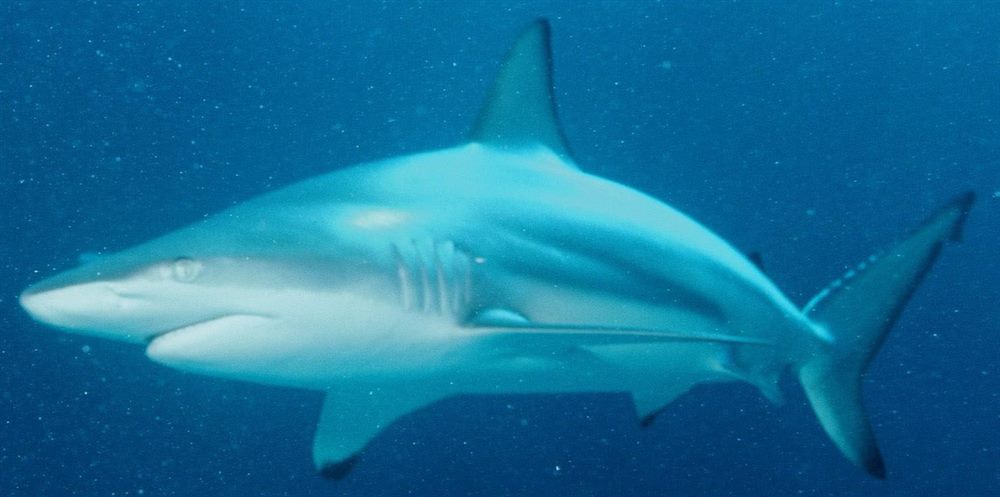
Blacktips are stocky, medium-sized sharks, dark gray to gray-brown above and white below, with a pale band along each flank. The pectoral fins, both dorsal fins and the lower tail lobe have black tips, which can fade on big adults. There is no ridge of skin between the dorsal fins. Adults average about 5 feet.
Spinner sharks look nearly the same and fall under different rules. Check two marks:
- Anal fin: plain white on an adult blacktip, black-tipped on a spinner except when very young.
- First dorsal fin: starts above the inner edge of the pectoral fin on a blacktip, behind it on a spinner.
Young blacktips can show a black-tipped anal fin, so on small sharks go by the dorsal fin. If you still aren't sure, release the shark.
Season dates
When blacktip shark may be kept, inshore and offshore.
Gulf state waters and Gulf federal waters
Open all year.
Limits and rules
Bag, size and vessel limits, and what else to know before you keep one.
Gulf state waters
No minimum size; 1 shark per person per day, 2 sharks per vessel (all sharks combined)
From shore: FWC shore-based shark fishing permit. On a boat with a federal HMS permit, federal limits apply here too (54 in. fork length, 1 per boat).
Gulf federal waters
54 in. fork length minimum; 1 shark per vessel per trip (shared with most other shark species)
HMS Angling permit with shark endorsement required. Non-offset, corrodible circle hooks (except flies/lures).
How to catch them
Tackle, baits and how to fish for blacktip shark, and how to release one well.
Blacktips eat mostly small schooling fish such as menhaden, mullet, sardines and herring. Live baits usually work best. Chum draws sharks, though chumming from the beach is banned. Use a wire leader.
Required:
- Hook and line only, with non-offset, non-stainless circle hooks and no multiple hooks for natural bait.
- A tool that can quickly cut the leader or hook.
- From shore, piers, bridges or jetties, anglers 16 and older need a free shore-based shark fishing permit, which requires an online course. Anglers under 16 need no permit, but must have taken the shark course in the past year or fish with a permit holder 16 or older who supervises them.
- Federal waters require a federal HMS Angling permit with a shark endorsement.
Release a shark in the water without delay, cutting the leader near the hook if needed. Don't hold it for photos.
Where and when
With the waters we cover where blacktip shark turn up, and their best months.
Blacktips rank among Florida's most common coastal sharks and live in the Gulf all year. Look off the beaches, in bays and estuaries and near river mouths, mostly in water under 100 feet. Schools often push inshore, frequently mixed with Spanish mackerel. In Southwest Florida they are probably the shark caught most in the bays and rivers in summer.
Pregnant females head for shallow bays to have their pups in spring and early summer. The pups grow up in shallow nursery water around barrier islands, marshes and estuaries. Cold months push many south or into deeper coastal water. Spinners are more common offshore.
- Sarasota nearshoreBest Mar–Oct
About blacktip shark: from myfwc.com, myfwc.com, myfwc.com, myfwc.com, myfwc.com, fisheries.noaa.gov, fisheries.noaa.gov, floridamuseum.ufl.edu and flseagrant.org. Written by H2O Cowboy; updated October 13, 2026.