Can you keep one today?
Rules as of October 11, 2026. Seasons open and close at midnight, Florida time.
- Gulf state watersOpen to keepall year
How to spot one
Caranx hippos
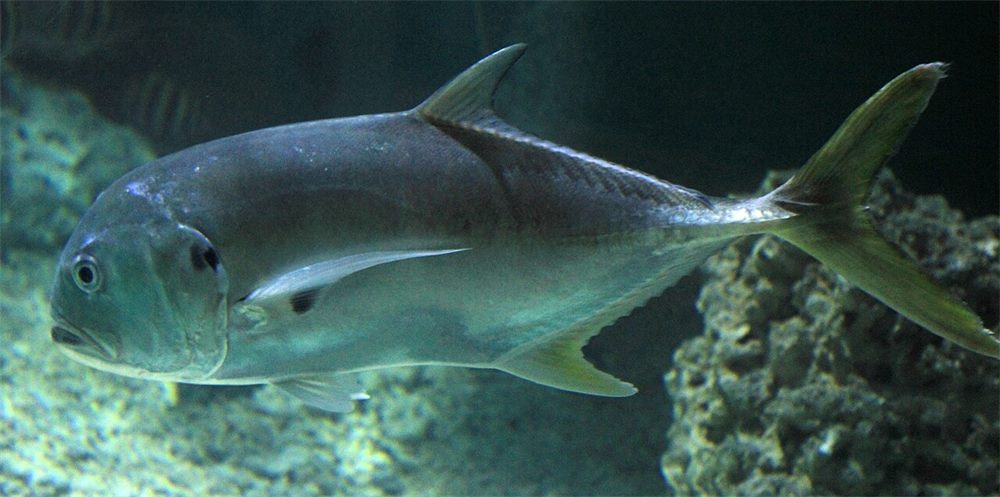
Crevalle jack are deep, muscular fish with a high, blunt head. The back runs from bluish-green to greenish-gold, and the belly is silver or yellowish. Look for a black spot on the gill cover and another at the base of each pectoral fin. The chest has no scales except a small patch in front of the pelvic fins. A hard, bony ridge runs along each side near the tail.
Most weigh 2 to 5 pounds. Inshore fish can reach about 15 pounds, and bigger ones live offshore. Florida's record weighed 57 pounds.
Two other jacks are easy to confuse with a crevalle:
- Blue runner: has a gill-cover spot too, but no black spot at the base of the pectoral fin.
- Horse-eye jack: a less steep head, a fully scaled chest, dark scutes near the tail, a yellow tail, and a small or missing gill-cover spot.
Season dates
When crevalle jack may be kept.
Open all year.
Limits and rules
Bag, size and vessel limits, and what else to know before you keep one.
No size limit; default bag 2 fish or 100 lb per person per day, whichever is more
FWC lists jack crevalle as 'unregulated'. Selling, or keeping more than the bag, needs a saltwater products license.
How to catch them
Tackle, baits and how to fish for crevalle jack, and how to release one well.
Look for jumping fish and boiling water where a school is feeding. Spoons and other lures retrieved fast work well, and so do live baitfish and shrimp. Crevalles feed mostly on small schooling fish such as menhaden, sardines and thread herring, and almost any bait or lure can draw a strike.
They fight hard and dive for the bottom, and big ones can straighten light hooks. Use strong hooks and tackle heavy enough to land the fish quickly.
For fish you release:
- Use a non-offset circle hook with natural bait.
- Unhook the fish in the water with wet hands.
- If you lift one, support it level with both hands.
- Release it head first.
Where and when
With the waters we cover where crevalle jack turn up, and their best months.
Crevalles roam from shallow bays to open water and handle a wide range of salinity. They can show up along the Gulf coast at any time. From April through November, young fish and small adults move into the estuaries. Larger adults spend more time offshore and often travel alone. No large jack is caught more often off Florida's west coast.
They hunt by day, usually in schools of similar-sized fish. A school will pin baitfish against the surface or a seawall and feed hard. They spawn offshore in spring and summer.
- Sarasota inshoreBest Mar–Nov
- Tampa Bay inshoreBest Mar–Nov
About crevalle jack: from myfwc.com, myfwc.com, myfwc.com, floridamuseum.ufl.edu, tpwd.texas.gov, myfwc.com, gis.myfwc.com and flseagrant.org. Written by H2O Cowboy; updated October 13, 2026.