Can you keep one today?
Rules as of October 11, 2026. Seasons open and close at midnight, Florida time.
- Gulf state watersDepends on the speciesmany are protected
- Gulf federal watersPast 9 nautical milesDepends on the speciesmany are protected
How to spot one
Several species
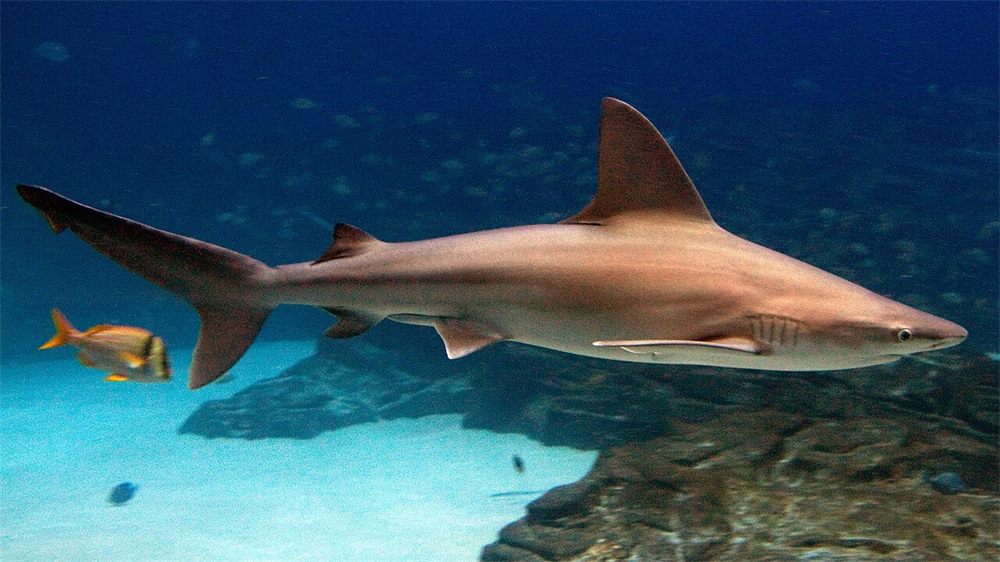
Rules vary by species and many sharks are protected, so identify each shark first:
- A ridge of skin between the dorsal fins: sandbar, dusky, silky and tiger sharks, all prohibited. Tigers show dark bars that fade with age.
- A hammer-shaped head: great, scalloped, smooth and Carolina hammerheads are prohibited. The small, round-headed bonnethead is legal.
- Two dorsal fins of nearly equal size: a yellowish lemon shark or a sand tiger, both prohibited, or a nurse shark, which has barbels by its nostrils.
- A stout body, a short, blunt snout, no ridge and a first dorsal fin much taller than the second: bull shark.
Also prohibited: sand tiger, bignose, night, Galapagos, Caribbean reef, Caribbean sharpnose, oceanic whitetip, shortfin and longfin mako, basking, whale and white sharks, and several rarer species. If you don't know, let it go.
Season dates
When sharks may be kept, inshore and offshore.
Gulf state waters and Gulf federal waters
Depends on the species: some may be kept all year, many never.
Limits and rules
Bag, size and vessel limits, and what else to know before you keep one.
Gulf state waters
1 shark per person per day, 2 per vessel. No size limit: Atlantic sharpnose, blacknose, blacktip, bonnethead, finetooth, smoothhounds; others 54 in. fork length
Many are prohibited (hammerheads except bonnethead, tiger, lemon, sandbar, dusky, makos): know the species or release it. From shore: FWC shark permit. On a boat with a federal HMS permit, federal limits apply.
Gulf federal waters
1 shark per vessel per trip, 54 in. fork length (hammerheads 78 in.); plus 1 Atlantic sharpnose and 1 bonnethead per person per trip, no size limit; smoothhounds no limit
Many species prohibited (sandbar, dusky, silky, makos...). HMS Angling permit with shark endorsement required.
How to catch them
Tackle, baits and how to fish for sharks, and how to release one well.
Chum and live bait draw sharks. Use a wire leader and at least 80-pound tackle to keep fights short. Required:
- Hook and line only, with non-offset, non-stainless circle hooks and no multiple hooks for natural bait.
- A tool to quickly cut the leader or hook.
- No chumming from the beach.
From shore, piers, bridges or jetties, anglers 16 and older need a free shore-based shark fishing permit and a yearly online course. Anglers under 16 need no permit, but must have taken the shark course in the past year or fish with a permit holder 16 or older who supervises them. Shore anglers after any species need it to use a metal leader over 4 feet, a fighting belt, or a hook 1.5 inches or larger with bait set out other than by casting. Federal waters require an HMS Angling permit with a shark endorsement, whose rules follow the boat into state waters.
A prohibited shark of any size must stay in the water: release it right away, where you caught it, cutting the leader near the hook if needed. Never pull a shark you might release onto a pier, bridge or boat. From a pier, lead it to the base to unhook it.
Where and when
With the waters we cover where sharks turn up, and their best months.
Locally, blacktips are probably the top catch in bays and rivers in summer, and bonnetheads use bays and Gulf all year. Juvenile bulls are common inshore, and bull sharks trail the spring tarpon into the passes. Small hammerheads enter the bays in spring. Sandbar and dusky sharks bite best in cooler months, around and beyond the passes. Spinner and silky sharks stay mostly offshore.
- Tampa Bay nearshoreBest Mar–Nov
About sharks: from myfwc.com, myfwc.com, law.cornell.edu, flrules.org, flrules.org, myfwc.com, fisheries.noaa.gov, fisheries.noaa.gov and flseagrant.org. Written by H2O Cowboy; updated October 13, 2026.