Can you keep one today?
Rules as of October 11, 2026. Seasons open and close at midnight, Florida time.
- Gulf state and federal watersInshore and offshoreOpen to keepall year
How to spot one
Archosargus probatocephalus
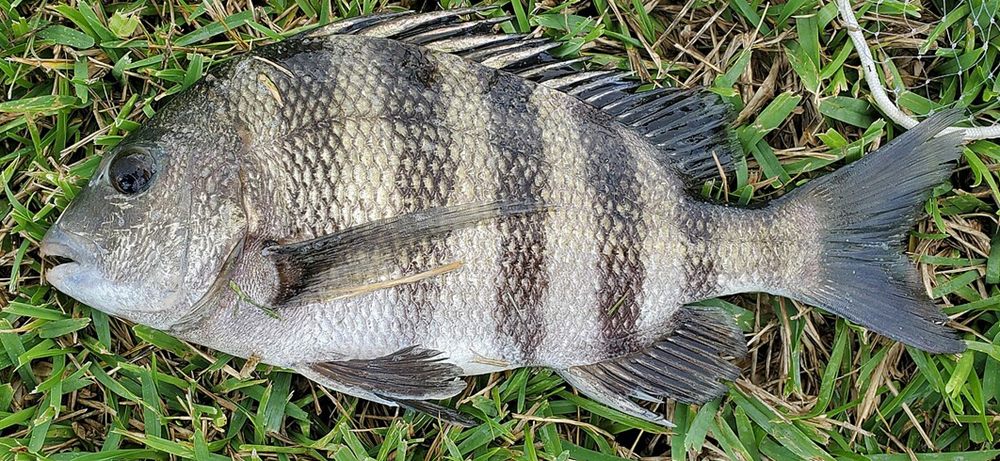
Sheepshead have a flat, oval body with five or six black bars on a silvery background, which is why some people call them convict fish. Their teeth look almost human, with incisors in front and rounded grinders behind. They use them to crush barnacles, oysters, crabs and clams. Stiff, sharp spines line the dorsal and anal fins, and the gill covers have sharp edges. Most weigh under 5 pounds. Florida's record, 15 pounds 2 ounces, came from Homosassa.
Young black drum also have dark bars, and they have different rules. A black drum has barbels under the chin and no incisors. A sheepshead has incisors, no barbels and narrower bars. Atlantic spadefish, another barred fish, also lacks the incisors.
Season dates
When sheepshead may be kept, inshore and offshore.
Open all year.
Limits and rules
Bag, size and vessel limits, and what else to know before you keep one.
8 per person per day; 12 in. minimum total length; 50 per vessel per trip in March and April
Legal gear: hook and line, cast net, seine, spear or gig. No treble or other multi-point hooks with natural bait.
How to catch them
Tackle, baits and how to fish for sheepshead, and how to release one well.
Fish on the bottom, right next to pilings, rocks and other structure. Piers and seawalls are good places to start. Use a small hook with live shrimp, sand fleas, fiddler crabs, or bits of clam or oyster. Pair a 1/0 to 3/0 hook with 10- to 20-pound mono or 15- to 20-pound braid, light tackle and just enough weight to hold bottom.
They bite softly and steal bait easily, so keep a tight line and watch for small taps. Many anglers scrape barnacles off pilings for chum. Leave live oysters alone, since they are protected.
When you release one, mind the spines and gill covers. Handle it with wet hands, unhook it in the water if you can, and cut the line if the hook is deep.
Where and when
With the waters we cover where sheepshead turn up, and their best months.
Find barnacles and oysters and you will usually find sheepshead. Look around docks, piers, bridge pilings, seawalls, rock jetties, mangroves, oyster bars and tidal creeks, usually in 1 to 20 feet of water. They also run up coastal rivers. They feed more at high tide and in the low light of morning and evening.
Cooling water starts their spawning run. In late winter and early spring the larger adults gather over nearshore rocks, ledges, artificial reefs and channel markers, then return inshore after spawning. Around Tampa Bay and Sarasota the best season runs from fall into spring, and most are caught in winter, when spawning peaks.
- Sarasota inshoreBest Nov–Apr
- Sarasota nearshoreBest Dec–Apr
- Tampa Bay inshoreBest Nov–Apr
- Tampa Bay nearshoreBest Dec–Apr
About sheepshead: from myfwc.com, myfwc.com, myfwc.com, myfwc.com, myfwc.com, myfwc.com, gis.myfwc.com, blogs.ifas.ufl.edu and flseagrant.org. Written by H2O Cowboy; updated October 13, 2026.