Can you keep one today?
Rules as of October 11, 2026. Seasons open and close at midnight, Florida time.
- Gulf state and federal watersInshore and offshoreOpen to keepall year
How to spot one
Scomberomorus maculatus
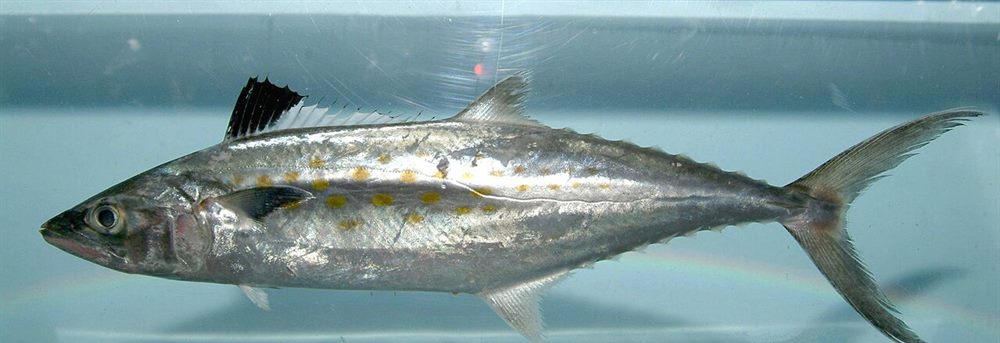
Spanish mackerel have a long, slim body, a deeply forked tail and tiny scales. The back is bluish-green, and the silver sides carry irregular gold spots. The front of the first dorsal fin has a bluish-black blotch. The lateral line slopes gently from the gill cover to the tail. The jaws are lined with razor-sharp teeth. Most weigh under 3 pounds, and the biggest reach about 36 inches.
King mackerel have different rules, and small kings carry gold spots too. They often school with Spanish mackerel of the same size. Check two marks:
- Lateral line: on a king it drops sharply below the second dorsal fin. On a Spanish mackerel it slopes gently.
- First dorsal fin: a king's has no dark blotch at the front.
Cero mackerel have a yellowish stripe along the side and live mainly in South Florida.
Season dates
When Spanish mackerel may be kept, inshore and offshore.
Open all year.
Limits and rules
Bag, size and vessel limits, and what else to know before you keep one.
15 per person per day; 12 in. fork length minimum
Must be landed whole (gutting allowed). State and federal bag limits can't be combined.
How to catch them
Tackle, baits and how to fish for Spanish mackerel, and how to release one well.
Diving birds are the best sign. They usually mean mackerel are pushing bait to the surface. Spanish mackerel chase fast-moving prey, so retrieve lures quickly. Small, shiny spoons, jigs and dusters work for casting or trolling. Live or cut sardines, herring and shrimp also catch them, and chum can bring a school to the boat.
Light spinning or baitcasting gear with 10- to 15-pound line is enough. Add a 30- to 60-pound mono leader or light wire, since their teeth cut light line.
Keep your fingers clear of the teeth. Unhook fish you plan to release with pliers or a dehooker, and get them back in the water head first.
Where and when
With the waters we cover where Spanish mackerel turn up, and their best months.
Spanish mackerel follow warm water. In late winter and spring they move north along the Gulf coast and usually show up off west-central Florida around April 1. In fall they head back south to spend the winter in South Florida, though a few stay year-round. They prefer water warmer than about 68°F and turn south when it drops below about 70°F. Around Tampa Bay the best season runs from winter through summer.
Look for them in the bay, nearshore and offshore, often over grass beds, reefs, rocky areas and artificial reefs that hold baitfish. Passes and ledges also hold fish.
- Sarasota inshoreBest Mar–Nov
- Sarasota nearshoreBest Mar–Nov
- Tampa Bay inshoreBest Mar–Nov
- Tampa Bay nearshoreBest Mar–Nov
About Spanish mackerel: from myfwc.com, myfwc.com, myfwc.com, myfwc.com, fisheries.noaa.gov, myfwc.com, myfwc.com, gis.myfwc.com, gis.myfwc.com, blogs.ifas.ufl.edu and flseagrant.org. Written by H2O Cowboy; updated October 13, 2026.