- Access
- From shore
- Best months
- October to May
- Species
- Snook, Redfish (red drum), Spotted seatrout, Sheepshead
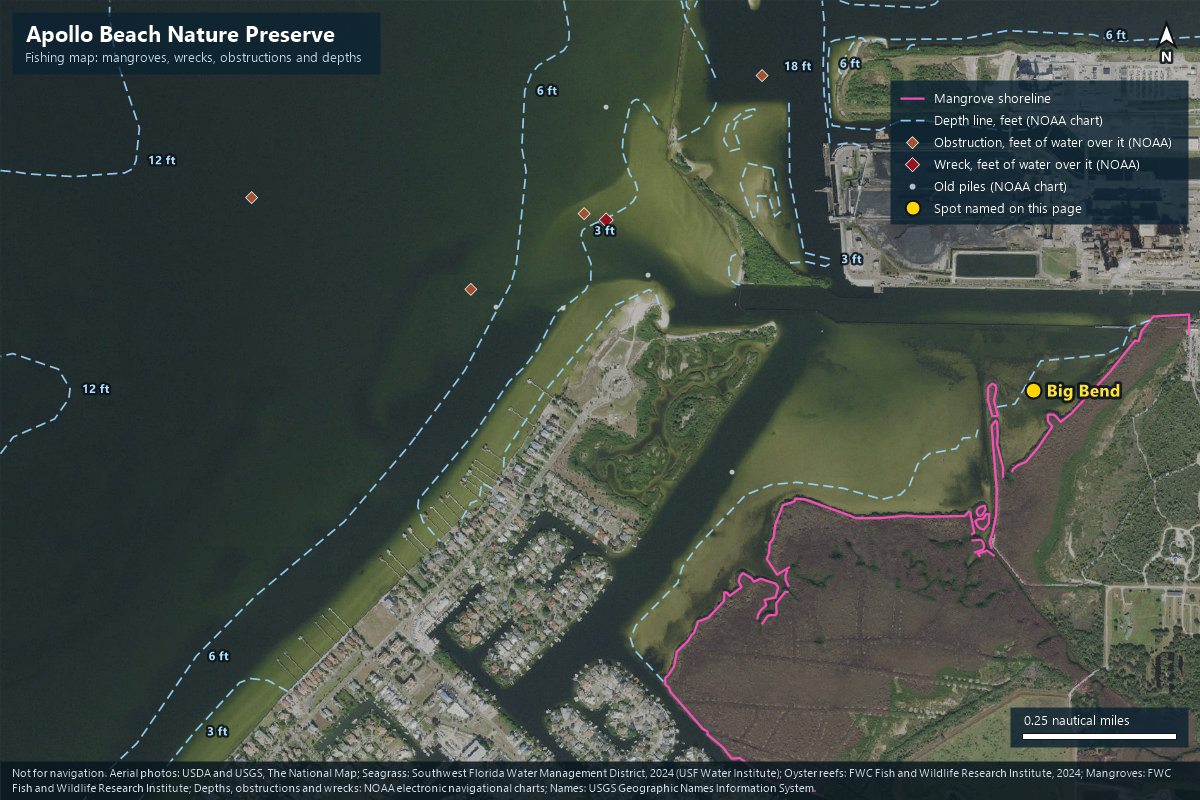
A 63-acre Hillsborough County preserve at the north tip of Apollo Beach, at the end of Surfside Boulevard, with Tampa Bay on the west and Tampa Electric's Big Bend power station and its discharge canal just to the north and northeast. Seven acres are open to visitors: a 2-acre sandy beach, picnic shelters, restrooms and a 37-foot observation tower. A short walking path (about 0.14 mile) leads toward the sandy hook at the north end. The rest of the preserve is a restoration area of tidal creeks with no public access, and the red trail along the north shore is closed.
Charted depths off the beach are about 2 feet close in and drop to 5 to 8 feet a few hundred yards out. The marked North Apollo Beach channel (daybeacons 1 to 17) curves around the north point and runs down the east side toward the North Apollo Beach canals, so there's moving water and a channel edge near the point. Across that channel to the northeast, lighted obstruction markers stand off the plant's bulkhead and groin, beside the Coast Guard security zone at the plant entrance. In winter the plant's warm water draws up to 300 manatees, and plenty of fish, to this corner of the bay.
The preserve is open every day from 8 a.m. to sunset. Parking is in the loop by the tower. The beach is for picnics and sunning; swimming isn't allowed. Weekend afternoons get crowded, so come early.
How to fish it
This is a shore-only spot, and it's at its best from late fall through spring. Sheepshead and spotted seatrout are regular catches, and the plant's warm water keeps this shore worth fishing in winter, when cold snaps pull snook toward it. In spring and fall, redfish and trout feed along the shallow edges and the point. In summer, fish the first hours of daylight.
Fish the sandy north point first, from the open end of the walking path. Moving water along the channel edge there carries bait past the point, so cast up-current and let a jig or bait swing down the edge, especially in the first hours of a falling tide. Keep your casts to the open bay and the channel off the point: stay off the closed trail along the north shore, and don't cast toward the plant's markers or the closed water beyond them. Along the beach, cast out to where the shallow sand starts to drop off, and fan-cast the shoreline on the rising tide when bait moves in.
For trout and redfish, a live shrimp under a popping cork is the simplest rig, or work a white or chartreuse paddle-tail grub on a 1/8- to 1/4-ounce jighead slowly along the edge. A gold spoon finds redfish in skinny water. For sheepshead, put a fiddler crab or a piece of shrimp on a small, strong hook with a knocker or split-shot rig and fish it on the bottom. In cold water, work baits and lures slowly near the bottom. A 7-foot medium spinning rod with 15- to 20-pound braid and a 20- to 30-pound fluorocarbon leader is plenty.
In winter, manatees crowd the water by the power station. Give them room: don't cast over them, and if one swims into your spot, reel in and wait. Check the snook season, and release snook quickly when it's closed. To release any fish, wet your hands, support it under the belly, keep it in the water when you can and use a dehooking tool.