Can you keep one today?
Rules as of October 11, 2026. Seasons open and close at midnight, Florida time.
- Gulf state watersOpen to keepall year
- Gulf federal watersPast 9 nautical milesOpen to keepall year
How to spot one
Rhomboplites aurorubens
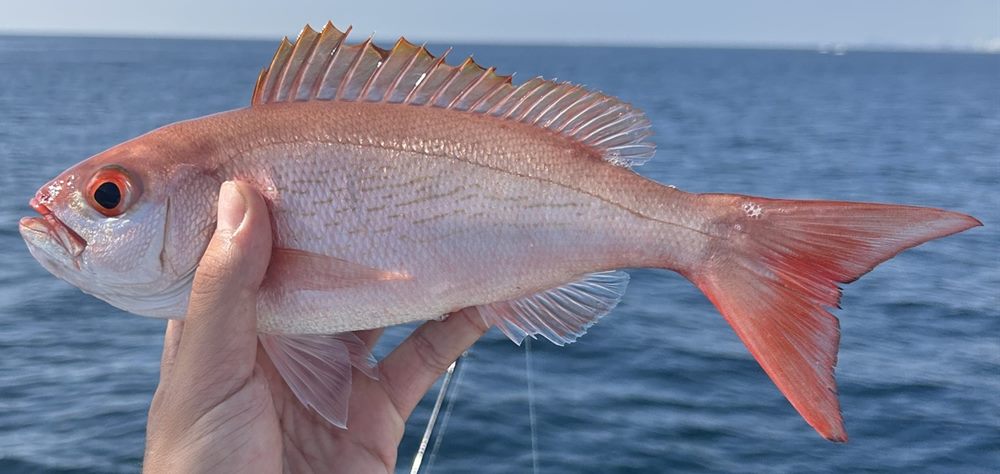
Vermilion snapper, also called beeliners or mingo, are slim, streamlined snapper. The back is rosy red and the belly pale to silvery white. Thin yellow-gold lines, some straight and some slanting, run along the lower sides. The eye is large and red, and the dorsal fin is rose with a yellow edge. Vermilion have no large canine teeth. Most are about 14 inches and under 2 pounds.
Red snapper look similar and have different rules. Both have red eyes, so check the anal fin, on the belly just ahead of the tail. A vermilion's is rounded. A red snapper's rear tip comes to a sharp point. The yellow lines and the lack of big canine teeth also point to a vermilion, and red snapper grow much larger.
Season dates
When vermilion snapper may be kept, inshore and offshore.
Gulf state waters and Gulf federal waters
Open all year.
Limits and rules
Bag, size and vessel limits, and what else to know before you keep one.
Gulf state waters
10 per person (not in the 10-snapper aggregate), 10 in. total length
State Reef Fish Angler designation needed.
Gulf federal waters
10 per person within the 20-fish reef fish aggregate, 10 in. total length
State Reef Fish Angler designation needed (private boat).
How to catch them
Tackle, baits and how to fish for vermilion snapper, and how to release one well.
Use small hooks baited with shrimp, squid or cut bait, fished near the bottom. Snappers also take soft-bodied jigs, bucktails and spoons.
When you fish for reef fish from a boat, you must use non-stainless steel circle hooks with natural bait (non-offset in state waters) and carry a dehooking tool. In Florida state waters you must also have a descending device or venting tool rigged and ready, and use one on any fish you release that shows barotrauma: a stomach pushed out of the mouth, bulging eyes, or floating. A descending device needs at least a 16-ounce weight and 60 feet of line; for bigger fish, use about a pound of weight for every five pounds of fish. The federal rule requiring one lapsed in January 2026 and a new one has been proposed, but sending a fish back down is still the best way to release it from deep water. To vent instead, slide a hollow tool under a scale two to three inches behind the base of the pectoral fin, at 45 degrees, and pull it out when the hissing stops. Never pierce a protruding stomach.
Where and when
With the waters we cover where vermilion snapper turn up, and their best months.
Vermilion live offshore over structure, from about 60 to 400 feet, most often shallower than 180. They favor rock, gravel or sand toward the edge of the shelf. They form large schools that don't travel far and can spend much of their lives on one reef. They feed up in the water column above the bottom, by night as well as by day. They spawn from April to September, mostly June through August. Summer is the best season for offshore snapper here.
- Sarasota offshoreBest all year
- Tampa Bay offshoreBest all year
About vermilion snapper: from myfwc.com, myfwc.com, fisheries.noaa.gov, gulfcouncil.org, flseagrant.org, ask.ifas.ufl.edu, myfwc.com, myfwc.com, myfwc.com and myfwc.com. Written by H2O Cowboy; updated October 13, 2026.