Can you keep one today?
Rules as of October 11, 2026. Seasons open and close at midnight, Florida time.
- Gulf state watersOpen to keepall year
- Gulf federal watersPast 9 nautical milesOpen to keepall year
How to spot one
Acanthocybium solandri
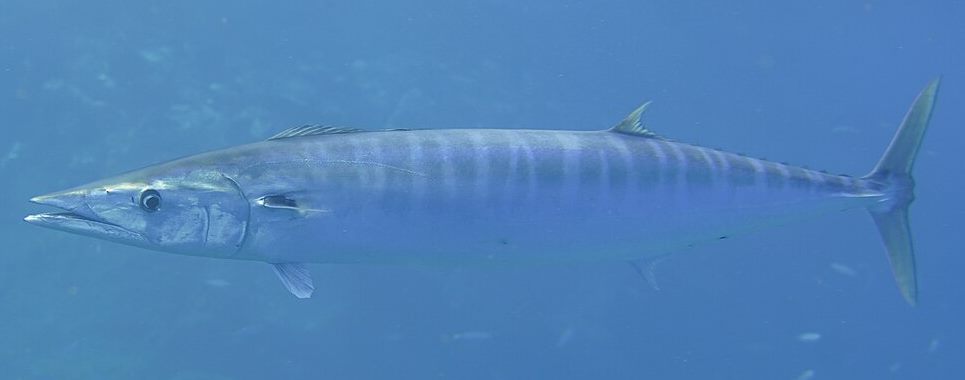
Wahoo are long, slender fish with a pointed, beak-like snout full of sharp, triangular, finely serrated teeth. The back is steel blue to dark bluish green, and the sides are silver. About 24 to 30 wavy, dark blue bars run down each side, and they fade quickly after death. The first dorsal fin is low and long, several times the length of the second. Most wahoo are 3 to 5 feet long.
King mackerel are the main look-alike, and the two fall under different rules. A king has no bars and lacks the long, low first dorsal fin, and its lateral line drops sharply under the second dorsal fin. The bars can vanish once the fish is iced, so look at the mouth too. A wahoo has a sharper, more pointed beak and finer, more tightly packed teeth than a king.
Season dates
When wahoo may be kept, inshore and offshore.
Gulf state waters and Gulf federal waters
Open all year.
Limits and rules
Bag, size and vessel limits, and what else to know before you keep one.
Gulf state waters
2 per person per day; no size limit
Must be landed whole (gutting allowed).
Gulf federal waters
No federal limit in the Gulf; Florida's 2 per person applies in state waters
Gulf wahoo isn't federally managed. Florida's limit applies once you're back in state waters.
How to catch them
Tackle, baits and how to fish for wahoo, and how to release one well.
Troll baits and lures on flatlines. Work weedlines, floating debris, banks and pinnacles, where wahoo gather. Wahoo are among the quickest fish in open water, and a hooked one makes long runs and sudden turns. Use a leader suited to toothy fish, such as steel or titanium.
Handle wahoo with care, since the teeth cut. Gaff one only when you know you will keep it. For a fish you release, keep it in the water, use a long dehooker or cut the leader close to the hook, and send it off head first.
Where and when
With the waters we cover where wahoo turn up, and their best months.
Wahoo roam tropical and subtropical seas. They hunt near the surface, alone or in small, scattered groups, and gather around banks, pinnacles and drifting objects such as sargassum and debris. Tropical seas hold them year-round, and in summer some range north into cooler water.
Off Florida's west coast, the blue water these fish favor lies near the edge of the continental shelf, much farther from land than off Pensacola or Destin. That puts wahoo a long run from Tampa Bay or Sarasota. In the western Panhandle, where deep water comes closer to shore, wahoo are a summer and fall fish.
- Sarasota offshoreNow and then
- Tampa Bay offshoreNow and then
About wahoo: from myfwc.com, myfwc.com, myfwc.com, fisheries.noaa.gov, floridamuseum.ufl.edu, gulfcouncil.org, myfwc.com, myfwc.com, myfwc.com, myfwc.com, myfwc.com and flseagrant.org. Written by H2O Cowboy; updated October 13, 2026.