- Depth
- 20-24 ft
- Access
- By boat
- Best months
- All year
- Species
- Snook, Tarpon, Mangrove (gray) snapper, Sheepshead, Florida pompano, Redfish (red drum), Black drum
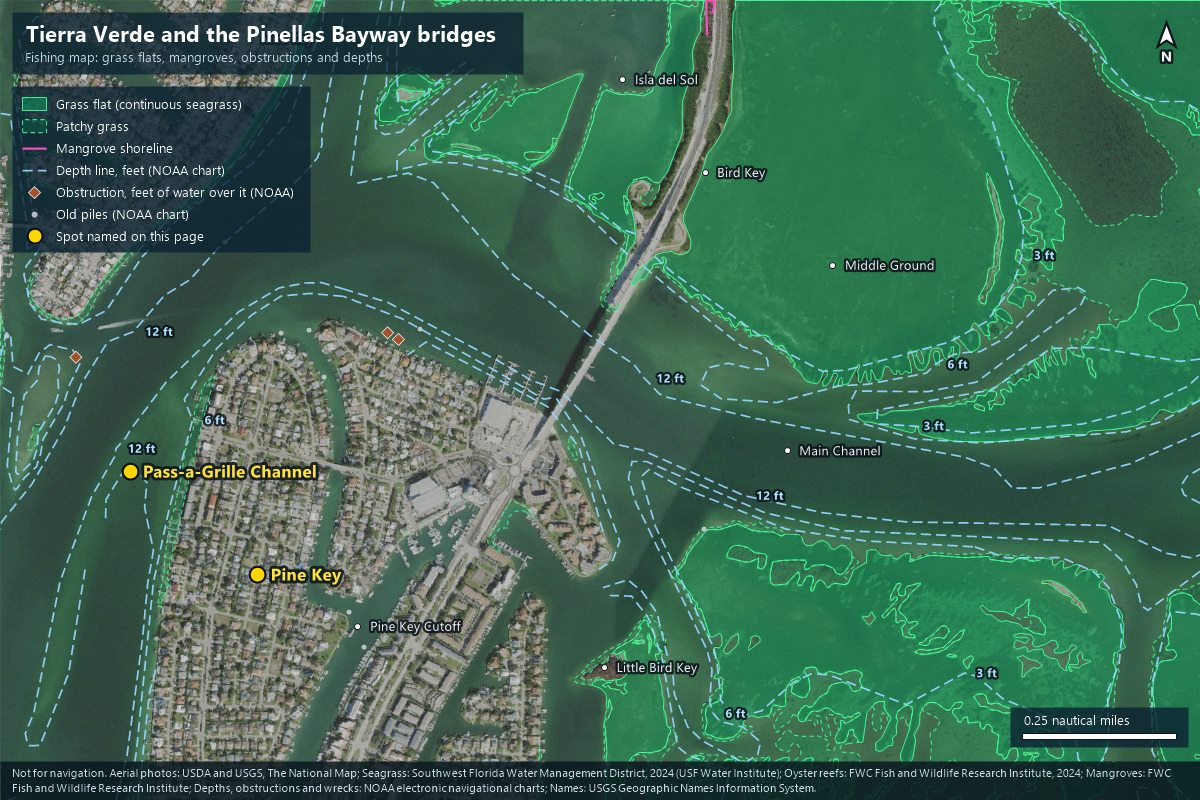
Tierra Verde is the island community between St. Pete Beach and Fort De Soto, built on what were Pine Key and part of Cabbage Key. The Pinellas Bayway South (State Road 679) crosses it on the way to the park. Its main span is the Tierra Verde Bridge over the Intracoastal Waterway, a high fixed bridge that replaced the old drawbridge; explosives took out the drawbridge's larger support pillars in May 2021.
At the bridge the channel runs about 20 to 24 feet deep, between shallow grass flats and the mouths of Tierra Verde's residential canals. The old drawbridge was known for the snook and tarpon living around its pilings, and the bridges, the marinas at the north end of the island and the canal seawalls are the structure that holds fish now. Pass-a-Grille Channel runs along the island's west side, and Bunces Pass along its south end.
This is boat and kayak fishing. The nearest launches are the Fort De Soto ramp (fee, open around the clock, with about half its lanes closed at a time for dock work through late 2026) and the Don CeSar ramp in St. Pete Beach, and the roadside paddle access at the Bunces Pass bridge puts kayaks in south of the island. The marinas at the north end of Tierra Verde sell fuel.
How to fish it
Something bites here in every season. Sheepshead crowd the bridge pilings, docks and marina structure from late fall into spring. Pompano pass under the bridges in spring and again in late summer and fall. Tarpon and snook hold around the bridges from late spring through summer, and mangrove snapper bite on the bridge structure through summer into fall. Black drum and redfish work the canals and docks, and redfish sometimes school on the flats around the island early in the day.
For tarpon, fish the afternoons and early evenings from late spring into summer, and watch for rolling fish at the tide changes. Live crabs, threadfins and big scaled sardines are the baits around bridges. Set your drag before the bite, and leave a big tarpon in the water to unhook it.
For snook, the biggest fish feed around the Intracoastal bridges after dark; fish the first two or three hours of the falling tide. Set the anchor up-current of the pilings, outside the channel, and let a live pinfish or other baitfish drift back to the base of the bridge. By day, look for snook in the shade of the bridge and along the canal docks, and sweep a live sardine or shrimp past them with the current.
Pompano bite under the bridges on the outgoing tide, in the clean, deeper water. Hop a small pompano jig or a bit of shrimp along the bottom with short, sharp lifts, and keep working the same lane once you catch one. For mangrove snapper, drop small live shrimp or small pilchards beside the pilings and chum sparingly. They're leader-shy in clear water, but around these pilings a heavier mono leader saves fish that would otherwise break off, so use the lightest leader the structure allows. For sheepshead, use fiddler crabs or shrimp on a light split-shot rig right against the pilings and seawalls.
In the cooler months, the deeper residential canals hold black drum, sheepshead and redfish. Soak a big live shrimp or a crab on the bottom near the larger docks. Fish them from your boat or kayak and stay off private docks and seawalls.